

Digital Experience (DX) gives you the ability to automate various tasks and workflows with workflow automation (WFA). The WFA process consists of a trigger, conditions, and a job. In some cases, you may want to use a scheduler.
- Trigger: User behavior or activity.
- Conditions: Determine the situation for the trigger or scheduler to fire. If you don't set any conditions, Digital Experience (DX) fires the trigger every time the selected event happens.
- Job: The action taken when the trigger or scheduler fires.
- Scheduler: Similar to a trigger, but fires regularly at a specified time, such as every Monday at 5 PM.
This process is different from creating scripts in Studio. Studio is a workflow tool that follows a logical flow from one state to another until the flow is finished. Workflow Automation allows you to define what you want to happen and when.
The Jungle at Classics receives multiple chat messages a day. Contact center administrator Mowgli Kipling wants to send an automated welcome message when a chat is started and a satisfaction survey right before the chat ends.
Mowgli creates a trigger with conditions for when a new chat comes in. Then, he creates a job to sends an automated welcome message and adds it to that trigger. This ensures the contact receives the welcome message immediately after starting the chat.
Next, Mowgli creates a trigger with conditions for the last action before the contact closes. Then, he creates a job to send a survey and adds it to the trigger. This ensures the contact is prompted to take a survey before closing the chat.
If-Then Statements
Think of workflow automation as creating if-then statements:
- IF [triggering event] happens THEN perform the [job].
- IF [triggering event] happens AND the interaction or message meets the [conditions] THEN perform the [job].
- IF [triggering event] happens AND the interaction or message meets the [conditions] THEN wait [delay time] THEN check the [conditions with delays] and IF there is a match THEN perform the [job].
The following diagram illustrates this flow:
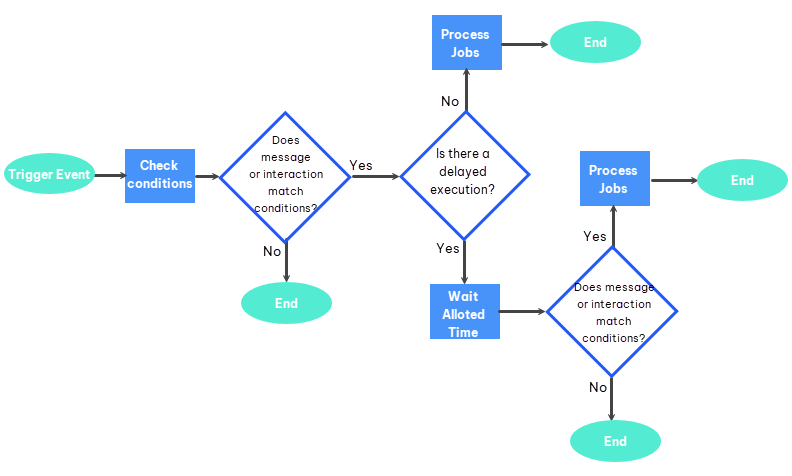
Process to Automate Tasks
To automate a task, follow this basic outline of a process:
- Create a trigger. Go to the triggers section to learn about triggers.
- Add conditions to a trigger. Each trigger has a different set of conditions that work with it.
- Add a job to the trigger. There are individual pages for each job. Go to the jobs section and locate the page for the job you want to add.
Workflow Automation Audit History
NiCE CXone stores change and activity history for workflow automation jobs, schedules, triggers, and conditions. You can access this information via the Change Audit report or the Activity Audit report in Dashboard.